Loading...
Overview

A leading global logistics and shipping enterprise approached VITA Solutions with an urgent operational challenge:

“Our freight allocation and route planning processes rely heavily on manual inputs. This leads to inefficiencies, underutilized capacity, higher operational costs, and missed delivery windows.”

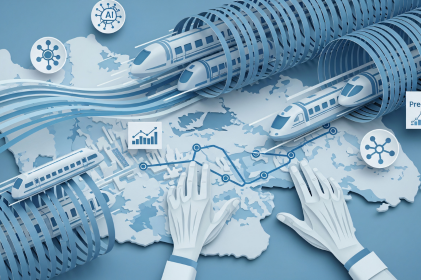
To address this, we implemented an AI-driven optimization engine tailored for the client’s logistics ecosystem. The solution intelligently analyzed historical shipment data, real-time traffic conditions, port delays, and carrier capacities to recommend optimal freight routing and load allocation — enabling the client to achieve smarter, faster, and more cost-effective shipping operations.

Industry

Logistic

Timeline

Ongoing

Services

Design, Development, and Deployment

Achievements
18%
Reduction in Fuel Consumption
28%
Increase in Multi-Load Consolidation
40% faster route planning cycle. Planning time dropped from hours to minutes.
22% fewer delayed shipments. Real-time congestion alerts and predictive re-routing minimized the impact of port delays.
Significant uplift in cstomer satisfaction scores. Timely deliveries, fewer exceptions, and predictable lead times.
Global scalability across regions. Optimization engine successfully expanded to additional trade lanes and country operations without re-engineering.
  • Slider
  • Slider
  • Slider
Project Challenges
changes

Inefficient freight allocation causing high operational costs

changes

Manual route planning with limited use of real-time data

changes

Lack of visibility into port congestion and carrier performance

changes

Underutilized fleet capacity and delayed shipments

changes

Limited predictive insights for demand and route optimization

How We Helped

Built the Right AI Optimization Framework for Freight Efficiency

Our Approach

VITA’s AI and data engineering teams collaborated with the client’s logistics planners and IT stakeholders to build a data-driven optimization engine powered by advanced analytics and machine learning. Key solution elements included:

Phase 1
AI-Based Route Optimization

Machine learning models that analyzed real-time conditions and suggested the most efficient routes and schedules.

Phase 2
Dynamic Freight Allocation

Intelligent load balancing to maximize carrier utilization and minimize empty runs.

Phase 3
Predictive Analytics

Forecasting shipment demand and port congestion using historical and live data.

Phase 4
Integrated Dashboard

Centralized view for planners to monitor KPIs such as delivery time, cost per shipment, and route performance.

Phase 5
Continuous Learning Loop

The AI model improved accuracy and route efficiency with every shipment cycle.

Technologies Used

Python AzureAI TensorFlow SQLsynapse GCPDataflow rest-api
50%
Faster Decision-Making for Planners
100%
Real-Time Visibility into Shipment KPIs
Slider
Tangible Results, Real Business Value

Within six months of implementation, the logistics operation achieved measurable improvements and strategic impact

24/7
Autonomous Optimization Engine
15%
Reduction in Empty Backhauls
30% reduction in overall freight costs through optimized routes and load distribution
25% faster delivery times by leveraging predictive routing and dynamic reallocation
20% improvement in fleet utilization leading to lower idle time and fuel costs
Enhanced visibility and control through AI-powered dashboards
Scalable optimization framework adaptable for future logistics networks Smarter Logistics. Lower Costs. Greater Predictability.
By combining AI and data intelligence, the client redefined how global freight is managed — unlocking a foundation for scalable, automated, and resilient logistics performance.
Success Stories

Discover how leading companies achieved remarkable results with our AI solutions

AI Case Studies

When Agile POD Teams Transform Digital Banking

Challenges

Our mobile apps and online channels lag behind customer expectations. Releases are slow, the user experience is outdated...

Solutions

Instead of applying a one-size-fits-all consulting model, we introduced an Agile POD delivery approach...

Learn More
AI Case Studies

When Automation Transforms Cargo Claims

Challenges

We process thousands of cargo claims every month. Manual handling slows us down, costs are rising, and errors are...

Solutions

The process was complex — involving multiple teams, paper trails, and manual validation steps. The client needed a...

Learn More
AI Case Studies

When Compliance Becomes Effortless with Automation

Challenges

Regulations keep changing. Manual compliance checks take too long, errors creep in, and clearance delays are...

Solutions

Instead of incremental fixes, we built an intelligent compliance automation framework powered by UiPath RPA...

Learn More